Best CNC Machining for Medical Implants in Canada
Compare CNC machining methods for medical implants in Canada. 5-axis milling vs Swiss turning vs EDM vs grinding - cost, lead time, and quality.
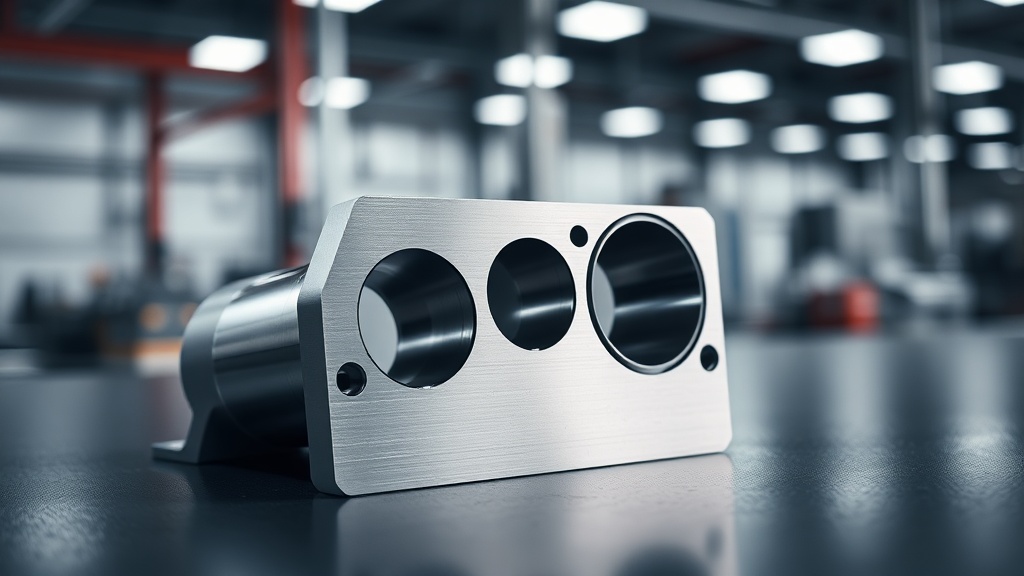
CNC Machining for Medical Implants: The Complete Guide
Medical implant machining represents the highest tier of precision manufacturing, combining aerospace-level tolerances with biocompatibility requirements and regulatory oversight. Canadian CNC machine shops serving the medical device industry operate under ISO 13485 quality systems and produce implants from titanium, cobalt chrome, stainless steel, and PEEK that meet Health Canada and FDA requirements.
The two dominant processes are 5-axis milling for complex structural implants (knee, hip, spinal) and Swiss-type turning for high-volume threaded components (bone screws, dental implants, pedicle screws). Both require medical-grade materials with full traceability, validated machining processes, and rigorous in-process and final inspection.
Why Canadian CNC Machining for Medical Implants?
Canada’s medical device sector generates over $10 billion annually, with significant clusters in Ontario, Quebec, and British Columbia. Canadian machine shops benefit from proximity to major implant companies and hospitals, a regulatory environment aligned with both Health Canada and FDA requirements, and government R&D incentives (SR&ED, NRC IRAP) that support process development. The Assembly network connects device companies with ISO 13485 certified shops that have validated implant machining capabilities.
The Custom Implant Revolution
Patient-specific implants designed from CT and MRI data are transforming orthopedic and craniomaxillofacial surgery. CNC machining produces the precision mating surfaces and critical dimensions these custom devices require, while 3D printing handles complex lattice structures for osseointegration. Canadian providers offering both technologies provide a complete solution for custom implant manufacturing.
Comparison: CNC Machining Methods
| Method | Cost | Lead Time | Quality | Best For | Rating |
|---|---|---|---|---|---|
| 5-Axis CNC Milling | $200–$5,000/part | 7–20 days | ±0.01mm tolerances, complex organic geometries, ISO 13485 traceable | Knee and hip implant components, spinal cages, cranial plates, custom implants | ★★★★★ |
| Swiss-Type CNC Turning | $5–$80/part | 5–12 days | Exceptional precision on small diameters, excellent surface finish | Bone screws, dental implants, spinal pedicle screws, orthopedic pins | ★★★★★ |
| Wire EDM | $100–$1,200/part | 5–15 days | No mechanical stress on workpiece, ±0.005mm, burr-free edges | Implant features requiring zero burr, thin-wall sections, micro features | ★★★★★ |
| CNC Grinding and Polishing | $50–$500/part | 3–10 days | Mirror finish (Ra 0.025), biocompatible surface preparation | Articulating surfaces, femoral heads, bearing surfaces, final finishing | ★★★★★ |
When to Use Each Method
5-Axis CNC Milling
- Implant has complex organic geometry matching patient anatomy
- Custom patient-specific implants are designed from CT/MRI data
- Titanium or cobalt chrome structural implants require tight tolerances
Swiss-Type CNC Turning
- High-volume production of bone screws or dental implants is needed
- Parts are small diameter (under 32mm) with length-to-diameter ratios over 3:1
- Thread forms, hexalobe drives, and cannulations must be machined in one setup
Wire EDM
- Features require zero burr for patient safety
- Thin-wall sections of cobalt chrome or titanium cannot be conventionally machined
CNC Grinding and Polishing
- Articulating bearing surfaces require mirror finish (Ra under 0.05)
- Surface roughness specification is critical for osseointegration or wear life
Top Canadian CNC Machining Providers
We're currently vetting cnc machining providers across Canada for medical implants. Join our waitlist to get matched with trusted suppliers when your spot opens.
Join the WaitlistFrequently Asked Questions
What certifications are required to machine medical implants in Canada?
What materials are used for CNC machined medical implants?
Can CNC machining produce patient-specific implants?
How does surface finish affect implant performance?
Get a CNC Machining Quote for Medical Implants
Compare cnc machining options for medical implants and get matched with the right Canadian manufacturer. Join our waitlist to get started.
Or email us at hello@theassembly.io
Explore related manufacturing decisions
Best CNC Machining for Aerospace Parts in Canada
Compare CNC machining methods for aerospace parts in Canada. 5-axis milling vs turning vs EDM vs grinding - cost, lead time, quality, and top providers.
CNC Machining for Defense: ITAR & CGP, Canada
ITAR-registered, AS9100D, CGP-cleared CNC machine shops in Canada. Compare 5-axis, 3-axis, Swiss-type, and EDM for tolerances to ±0.003mm.
Best CNC Machining for Prototyping in Canada
Compare CNC machining methods for prototyping in Canada. FDM vs SLA vs CNC vs SLS - cost, lead time, quality, and top Canadian providers.
Best 3D Printing for Aerospace Parts in Canada
Compare 3D printing technologies for aerospace parts in Canada. DMLS vs SLS vs MJF vs FDM - cost, lead time, quality, and top Canadian aerospace providers.
Best 3D Printing for Automotive Parts in Canada
Compare 3D printing technologies for automotive parts in Canada. SLS vs MJF vs DMLS vs FDM - cost, lead time, quality, and top Canadian providers.
Best 3D Printing for Dental Applications in Canada
Compare 3D printing technologies for dental applications in Canada. SLA vs DLP vs MJF vs milling - cost, lead time, quality, and top Canadian dental providers.
Manufacturing intel.
Every Tuesday.
Real costs, vetted Canadian suppliers, and government funding alerts. One free email a week.
Unsubscribe anytime. Your data stays in Canada.