Best 3D Printing for Aerospace Parts in Canada
Compare 3D printing technologies for aerospace parts in Canada. DMLS vs SLS vs MJF vs FDM - cost, lead time, quality, and top Canadian aerospace providers.
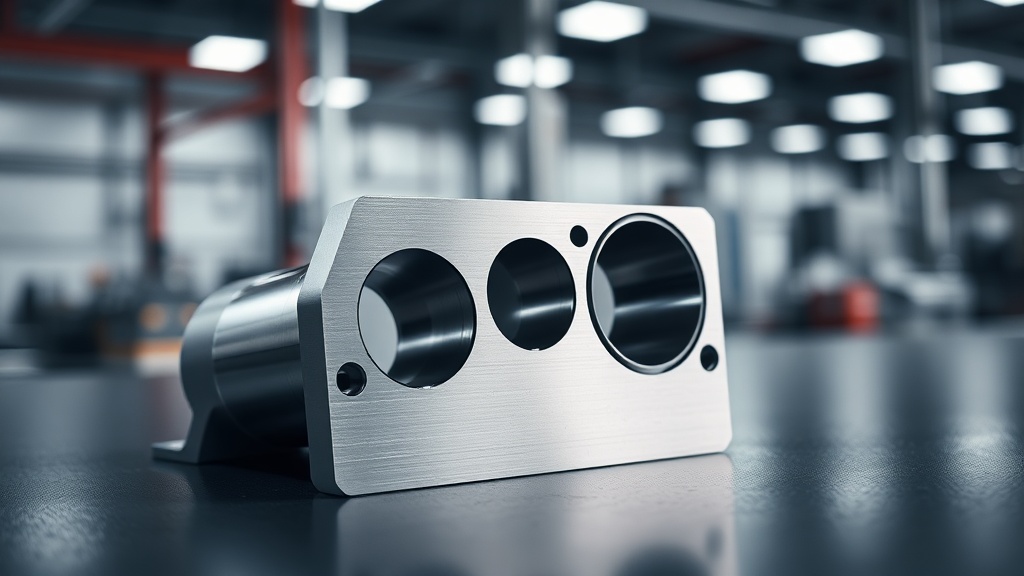
3D Printing for Aerospace Parts: The Complete Guide
Aerospace manufacturing demands extreme precision, full material traceability, and certified quality systems. 3D printing - particularly Direct Metal Laser Sintering - has become a mainstream production method for aerospace components, enabling complex geometries that reduce part weight by 40-60% compared to traditionally machined alternatives. Canadian aerospace 3D printing providers serve the country’s $32 billion aerospace sector with AS9100-certified facilities.
For metal flight hardware, DMLS in titanium and Inconel delivers parts that meet or exceed the mechanical properties of wrought equivalents. For interior cabin components, polymer processes like SLS and FDM with ULTEM 9085 provide FAR 25.853 compliant parts at a fraction of the cost and lead time of traditional manufacturing.
Why Canadian 3D Printing for Aerospace?
Canada’s aerospace cluster - particularly in Montreal, Toronto, and Winnipeg - includes hundreds of Tier 1 and Tier 2 suppliers already integrated into global supply chains for Boeing, Airbus, Bombardier, and Pratt & Whitney. Canadian 3D printing providers operating within these clusters understand aerospace quality requirements and maintain the certifications needed for flight-qualified production. Proximity to these OEMs reduces logistics costs and enables rapid design iteration.
Weight Reduction Through Design Freedom
The greatest advantage of 3D printing for aerospace is topology optimization - using software to remove material wherever it isn’t structurally required. DMLS titanium brackets can be 50-70% lighter than their machined counterparts while maintaining identical load-bearing capacity. For an industry where every gram matters, this translates directly to fuel savings and payload capacity.
Comparison: 3D Printing Methods
| Method | Cost | Lead Time | Quality | Best For | Rating |
|---|---|---|---|---|---|
| Direct Metal Laser Sintering (DMLS) | $150–$2,000/part | 7–14 days | Flight-grade metal parts, full density, AS9100-traceable | Structural brackets, engine components, flight-qualified hardware | ★★★★★ |
| Selective Laser Sintering (SLS) | $20–$120/part | 3–7 days | High-strength nylon, good chemical resistance, lightweight | Interior cabin components, ducting, non-structural brackets | ★★★★★ |
| Multi Jet Fusion (MJF) | $10–$60/part | 3–5 days | Consistent PA12 parts, good mechanical properties | Tooling, jigs, fixtures, cabin hardware prototypes | ★★★★★ |
| Fused Deposition Modeling (FDM) | $8–$50/part | 1–3 days | ULTEM 9085 and polycarbonate options, FAR 25.853 compliant materials available | Non-critical interior parts, form-fit prototypes, ground support equipment | ★★★★★ |
When to Use Each Method
DMLS
- You need flight-qualified metal parts in titanium, Inconel, or aluminum
- Part geometry is too complex for traditional CNC machining
- You need rapid iteration on metal structural components
SLS
- You need lightweight polymer parts with good fatigue life
- Interior components require flame retardant nylon
- Complex ducting or airflow management parts are needed
MJF
- Producing tooling and fixtures for aerospace assembly lines
- Prototyping cabin hardware before committing to injection molds
FDM
- You need FAR 25.853 compliant interior cabin parts
- Ground support equipment or non-flight tooling is required
Top Canadian 3D Printing Providers
We're currently vetting 3d printing providers across Canada for aerospace parts. Join our waitlist to get matched with trusted suppliers when your spot opens.
Join the WaitlistFrequently Asked Questions
Can 3D printed parts be used on certified aircraft?
What metals are available for aerospace 3D printing in Canada?
How does 3D printing reduce aerospace part lead times?
What certifications should I look for in an aerospace 3D printing provider?
Get a 3D Printing Quote for Aerospace Parts
Compare 3d printing options for aerospace parts and get matched with the right Canadian manufacturer. Join our waitlist to get started.
Or email us at hello@theassembly.io
Explore related manufacturing decisions
Best 3D Printing for Automotive Parts in Canada
Compare 3D printing technologies for automotive parts in Canada. SLS vs MJF vs DMLS vs FDM - cost, lead time, quality, and top Canadian providers.
Best 3D Printing for Dental Applications in Canada
Compare 3D printing technologies for dental applications in Canada. SLA vs DLP vs MJF vs milling - cost, lead time, quality, and top Canadian dental providers.
Best 3D Printing for Educational Institutions in Canada
Compare 3D printing technologies for educational institutions in Canada. FDM vs SLA vs MJF vs SLS - cost, lead time, quality, and top providers for universities and colleges.
Best CNC Machining for Aerospace Parts in Canada
Compare CNC machining methods for aerospace parts in Canada. 5-axis milling vs turning vs EDM vs grinding - cost, lead time, quality, and top providers.
3D Printing for Jewelry (2026): SLA, DLP, DMLS Costs $2–$500/piece
Canadian pricing, lead times, and provider comparison for SLA, DLP, DMLS, and lost-wax patterns — the 4 methods jewelers actually use.
Best 3D Printing for Small Batch Production in Canada
Compare 3D printing technologies for small batch production in Canada. FDM vs SLS vs MJF vs SLA - cost, lead time, quality, and top Canadian providers.
Manufacturing intel.
Every Tuesday.
Real costs, vetted Canadian suppliers, and government funding alerts. One free email a week.
Unsubscribe anytime. Your data stays in Canada.