Best Casting for Industrial Parts in Canada
Compare casting methods for industrial parts in Canada. Sand casting vs investment casting vs die casting vs centrifugal - cost, lead time, and quality.
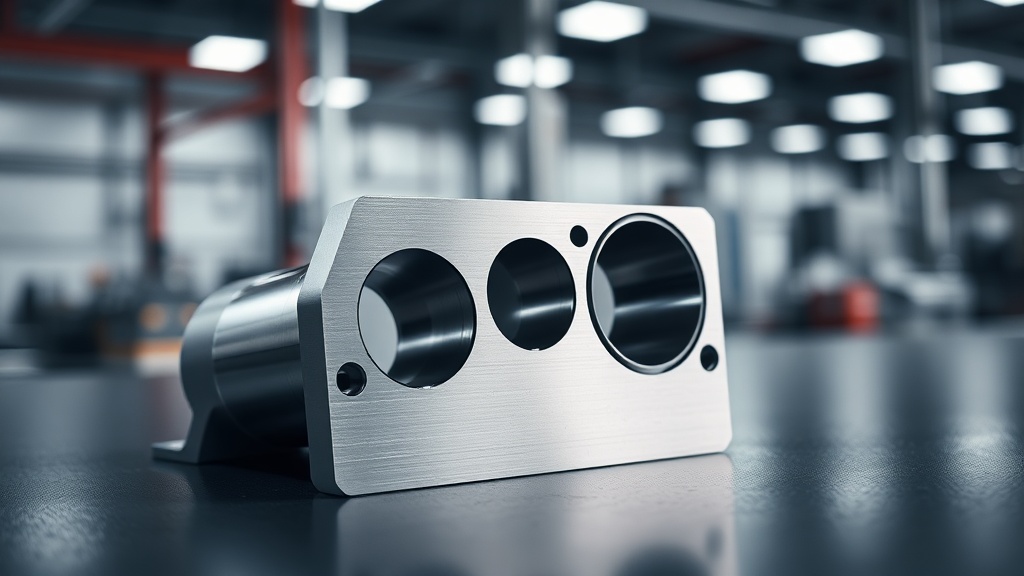
Casting for Industrial Parts: The Complete Guide
Industrial casting encompasses a vast range of components - from 50 kg pump housings to 5,000 kg machine bases. Canada’s foundry industry has served heavy industry for over a century, with particular strength in mining equipment, oil and gas components, pulp and paper machinery, and power generation parts. The choice of casting method depends on part size, volume, material, and required mechanical properties.
Sand casting remains the workhorse of industrial manufacturing, offering unmatched flexibility in part size, material selection, and production volume. For precision components like valve trim and impellers, investment casting delivers near-net-shape parts that minimize expensive secondary machining.
Why Canadian Casting for Industrial Parts?
Canada’s industrial economy - mining, oil and gas, forestry, hydroelectric power - creates enormous domestic demand for cast components. Canadian foundries have deep expertise in the high-strength alloys and large-format castings these industries require. Sourcing domestically eliminates the 8-12 week ocean shipping times associated with offshore casting and enables faster replacement part delivery for critical equipment.
Rapid Prototyping with 3D Printed Sand Molds
Modern foundries can bypass traditional wooden patterns entirely by 3D printing sand molds directly from CAD files. This reduces prototype casting lead times from 6-8 weeks to 1-2 weeks and eliminates pattern storage costs. For industrial equipment manufacturers developing new products, this dramatically accelerates the development cycle.
Comparison: Casting Methods
| Method | Cost | Lead Time | Quality | Best For | Rating |
|---|---|---|---|---|---|
| Sand Casting | $30–$800/part | 2–6 weeks | Versatile for all sizes, good for iron and steel, wide material range | Pump housings, valve bodies, large machine bases, 1-1,000 units | ★★★★★ |
| Investment Casting (Lost Wax) | $25–$300/part | 4–8 weeks | Excellent dimensional accuracy, complex geometries, near-net-shape | Impellers, valve trim, complex brackets, precision fittings, 50-5,000 units | ★★★★★ |
| Centrifugal Casting | $40–$600/part | 3–6 weeks | Superior density and mechanical properties, no porosity in outer wall | Pipes, bushings, cylinder liners, rings, tubular shapes | ★★★★★ |
| Die Casting | $3–$30/part | 8–14 weeks (tooling), 1–2 days (production) | Excellent repeatability, tight tolerances, high surface finish | High-volume aluminum or zinc components, 10,000+ units | ★★★★★ |
When to Use Each Method
Sand Casting
- Parts are large (over 500mm) or heavy (over 50 kg)
- Low to mid volumes do not justify die casting tooling costs
- Iron or steel materials are required for strength, wear, or heat resistance
Investment Casting
- Parts have complex internal passages or thin walls
- Tight dimensional tolerances reduce secondary machining costs
- Stainless steel or exotic alloys are specified
Centrifugal Casting
- Cylindrical or tubular shapes are needed with maximum density
- Parts must withstand high pressure or wear (bushings, liners, pipes)
Die Casting
- Annual volumes exceed 10,000 units and part size is under 25 kg
- Aluminum or zinc parts need tight tolerances without extensive machining
Top Canadian Casting Providers
We're currently vetting casting providers across Canada for industrial parts. Join our waitlist to get matched with trusted suppliers when your spot opens.
Join the WaitlistFrequently Asked Questions
What is the maximum size for industrial castings in Canada?
Which casting method provides the best mechanical properties?
Can 3D printing replace casting for industrial parts?
What materials are available for industrial castings in Canada?
Get a Casting Quote for Industrial Parts
Compare casting options for industrial parts and get matched with the right Canadian manufacturer. Join our waitlist to get started.
Or email us at hello@theassembly.io
Explore related manufacturing decisions
Best Casting for Automotive Parts in Canada
Compare casting methods for automotive parts in Canada. Die casting vs sand casting vs investment casting vs lost foam - cost, lead time, and quality.
Best 3D Printing for Aerospace Parts in Canada
Compare 3D printing technologies for aerospace parts in Canada. DMLS vs SLS vs MJF vs FDM - cost, lead time, quality, and top Canadian aerospace providers.
Best 3D Printing for Automotive Parts in Canada
Compare 3D printing technologies for automotive parts in Canada. SLS vs MJF vs DMLS vs FDM - cost, lead time, quality, and top Canadian providers.
Best 3D Printing for Dental Applications in Canada
Compare 3D printing technologies for dental applications in Canada. SLA vs DLP vs MJF vs milling - cost, lead time, quality, and top Canadian dental providers.
Manufacturing intel.
Every Tuesday.
Real costs, vetted Canadian suppliers, and government funding alerts. One free email a week.
Unsubscribe anytime. Your data stays in Canada.