Best Casting for Automotive Parts in Canada
Compare casting methods for automotive parts in Canada. Die casting vs sand casting vs investment casting vs lost foam - cost, lead time, and quality.
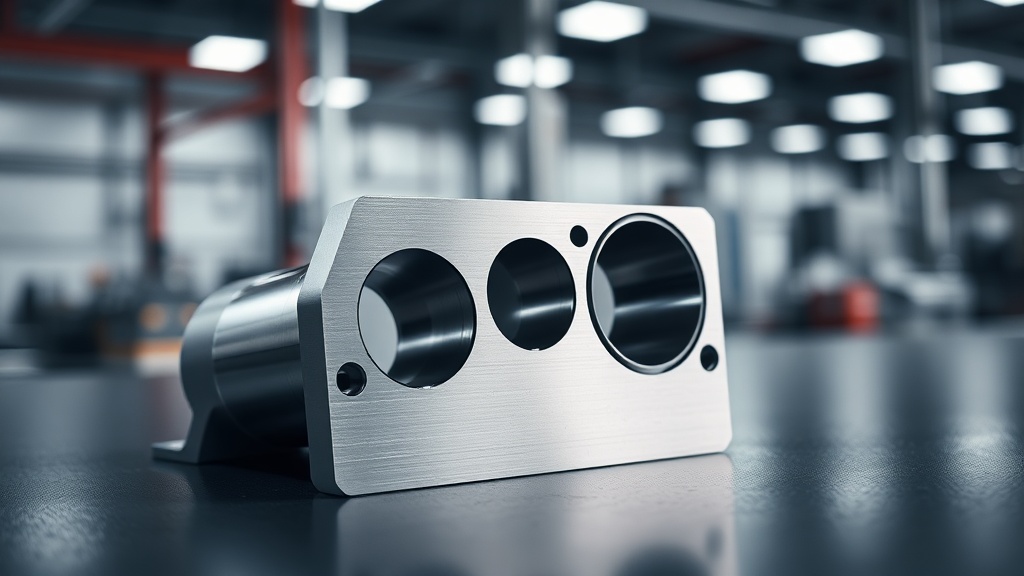
Casting for Automotive Parts: The Complete Guide
Automotive casting in Canada benefits from decades of manufacturing expertise concentrated in Ontario’s automotive corridor. From engine blocks and transmission housings to EV battery enclosures and structural mega-castings, Canadian foundries produce critical components for every major automaker. The choice of casting method depends on volume, complexity, material, and dimensional requirements.
High pressure die casting dominates automotive production for aluminum and magnesium parts, delivering millions of components annually with tight tolerances and excellent surface finish. For lower volumes or prototype work, sand casting and investment casting provide cost-effective alternatives without the significant tooling investment.
Why Canadian Casting for Automotive?
Canada’s automotive casting industry is deeply integrated into the North American supply chain, with CUSMA (formerly NAFTA) enabling duty-free trade with the US and Mexico. Ontario alone accounts for more vehicle assembly than any US state, and local foundries supply these plants with castings that meet IATF 16949 quality standards. Proximity to assembly plants reduces logistics costs and enables just-in-time delivery.
The Mega-Casting Revolution
Structural die castings that replace dozens of stamped and welded components are reshaping automotive manufacturing. This trend requires massive die casting machines (6,000-9,000 ton clamping force) and sophisticated tooling. Canadian foundries investing in this capability position themselves to serve the next generation of EV platforms.
Comparison: Casting Methods
| Method | Cost | Lead Time | Quality | Best For | Rating |
|---|---|---|---|---|---|
| High Pressure Die Casting (HPDC) | $2–$25/part | 8–14 weeks (tooling), 1–3 days (production) | Excellent surface finish, tight tolerances (±0.1mm), high volume | Engine blocks, transmission housings, structural components, 10,000+ units | ★★★★★ |
| Sand Casting | $50–$500/part | 2–6 weeks | Good for large parts, rougher surface, wider tolerances (±0.5mm) | Low-volume prototypes, large housings, suspension components, 1-500 units | ★★★★★ |
| Investment Casting (Lost Wax) | $20–$200/part | 4–8 weeks | Excellent detail, near-net-shape, minimal machining required | Complex turbo housings, exhaust manifolds, precision brackets, 100-5,000 units | ★★★★★ |
| Permanent Mold (Gravity) Casting | $5–$50/part | 6–10 weeks (tooling), 1–2 days (production) | Better than sand, good mechanical properties, moderate volume | Wheels, suspension knuckles, mid-volume structural parts, 1,000-50,000 units | ★★★★★ |
When to Use Each Method
HPDC
- Production volumes exceed 10,000 units per year
- Parts require thin walls (1-3mm) with tight dimensional tolerances
- Aluminum or magnesium lightweight structural components are needed
Sand Casting
- You need prototype or low-volume castings (under 500 units)
- Parts are large (over 500mm) and traditional die casting is impractical
- Iron or steel castings are required for strength and heat resistance
Investment Casting
- Complex internal passages or thin-wall geometries are required
- Near-net-shape parts minimize secondary machining costs
Permanent Mold
- Mid-volume production of aluminum parts with good mechanical properties
- Superior strength to die casting is needed (slower cooling improves grain structure)
Top Canadian Casting Providers
We're currently vetting casting providers across Canada for automotive parts. Join our waitlist to get matched with trusted suppliers when your spot opens.
Join the WaitlistFrequently Asked Questions
What automotive quality certifications are required for casting suppliers?
How is lightweighting driving casting changes in automotive?
What is the typical lead time for automotive casting tooling?
Can Canadian foundries handle automotive production volumes?
Get a Casting Quote for Automotive Parts
Compare casting options for automotive parts and get matched with the right Canadian manufacturer. Join our waitlist to get started.
Or email us at hello@theassembly.io
Explore related manufacturing decisions
Best Casting for Industrial Parts in Canada
Compare casting methods for industrial parts in Canada. Sand casting vs investment casting vs die casting vs centrifugal - cost, lead time, and quality.
Best 3D Printing for Automotive Parts in Canada
Compare 3D printing technologies for automotive parts in Canada. SLS vs MJF vs DMLS vs FDM - cost, lead time, quality, and top Canadian providers.
Best Injection Molding for Automotive Parts in Canada
Compare injection molding methods for automotive parts in Canada. Thermoplastic vs structural foam vs overmolding vs gas-assist - cost, lead time, quality, and top providers.
Best 3D Printing for Aerospace Parts in Canada
Compare 3D printing technologies for aerospace parts in Canada. DMLS vs SLS vs MJF vs FDM - cost, lead time, quality, and top Canadian aerospace providers.
Manufacturing intel.
Every Tuesday.
Real costs, vetted Canadian suppliers, and government funding alerts. One free email a week.
Unsubscribe anytime. Your data stays in Canada.