How to Manufacture Industrial Robots in Canada
Canada has a growing industrial robotics ecosystem, anchored by strong university research programs, government automation incentives, and a manufacturing base capable of producing precision components for robotic arms, end effectors, linear motion systems, and collaborative robots. The federal government's push to boost manufacturing productivity through automation has further accelerated demand for domestically produced robotics hardware.
Why Manufacture Industrial Robots in Canada?
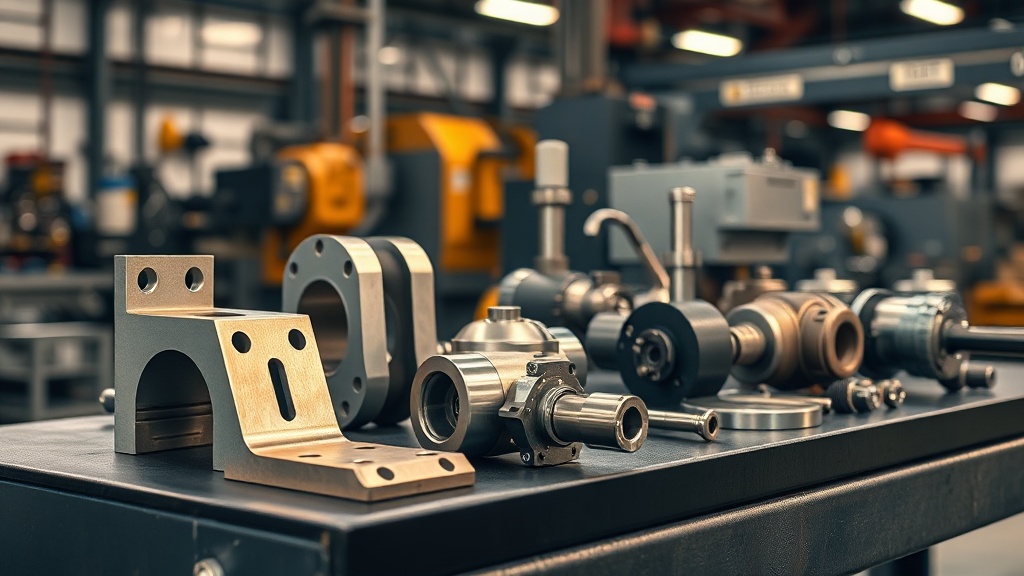
Industrial robotics is one of the fastest-growing segments of advanced manufacturing, and Canada is building the domestic capability to compete. With world-class university robotics programs, federal automation incentives, and a precision manufacturing base built on decades of aerospace and automotive production, Canada has the ingredients to become a significant player in robotics hardware manufacturing.
The economics of robotics manufacturing favor Canadian production. Robot components are high-precision, low-volume, and engineering-intensive - exactly the profile where Canadian manufacturers excel. A robotic joint housing machined to 5-micron tolerances does not benefit from Asian mass-production economics, but it does benefit from the engineering collaboration and rapid iteration that proximity enables.
The Reshoring Opportunity
The global push to secure automation supply chains - driven by geopolitical tension and tariff uncertainty - has created an opening for Canadian robotics manufacturing. US automation companies are actively seeking allied-nation suppliers for precision components, and CUSMA provides duty-free access. Canada’s SR&ED tax credits further reduce development costs by 15-35%.
What Makes Canada Different
- Precision Manufacturing: Aerospace-grade machining capability applied to robotics
- Engineering Collaboration: Proximity for co-development and rapid design iteration
- R&D Incentives: SR&ED tax credits and NRC IRAP funding reduce development costs
- IP Protection: Strong legal framework for proprietary robotics technology
- CUSMA Access: Duty-free export of robotics components to US integrators
Best Processes for Industrial Robots
CNC Machining (5-Axis)
High-precision machining of robot arm links, joint housings, gearbox cases, and end effector mounting plates in aluminum and steel alloys.
3D Printing (DMLS/MJF)
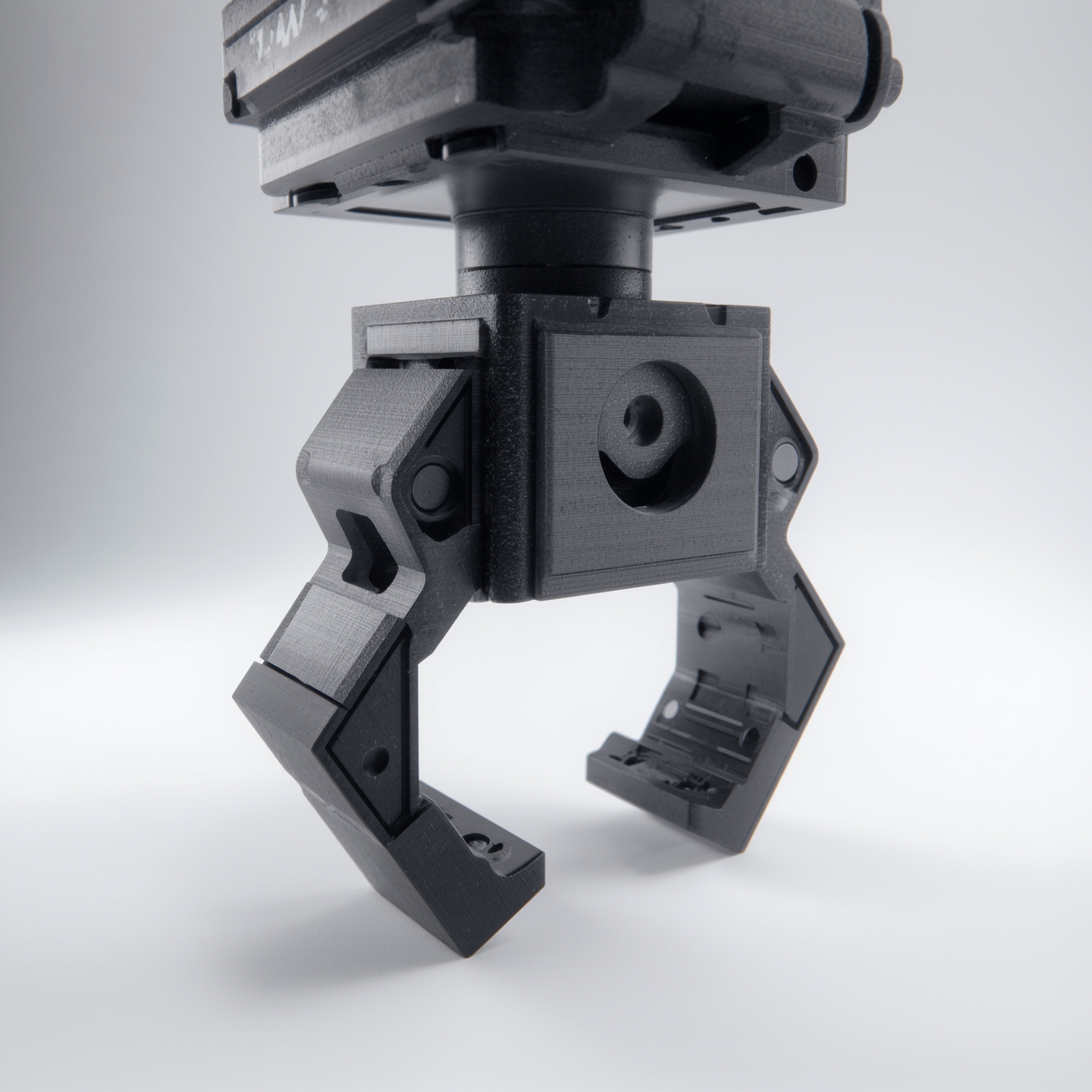
Additive manufacturing of complex-geometry end effectors, gripper fingers, cable routing components, and prototype robot parts.
Wire EDM and Precision Grinding
Ultra-precision machining of gear profiles, bearing surfaces, encoder discs, and tight-tolerance mating surfaces.
Electromechanical Assembly
Integration of motors, drives, sensors, wiring harnesses, and control electronics into complete robotic subsystems.
Materials Guide
| Material | Description | Applications |
|---|---|---|
| Aluminum 7075-T6 | High strength-to-weight ratio - the primary structural material for robot arm links and housings | Arm links, joint housings, base structures, mounting plates |
| 4140 Alloy Steel (Heat Treated) | High hardness and wear resistance for gears, shafts, and bearing surfaces | Gear shafts, pinion gears, bearing housings, pivot pins |
| Nylon PA12 (MJF) | Durable, lightweight polymer for functional robot components and custom end effectors | Gripper fingers, cable guides, sensor brackets, prototype components |
| Carbon Fiber Composite | Maximum stiffness-to-weight ratio for robot arm segments where inertia reduction is critical | Upper arm links, wrist sections, high-speed pick-and-place arms |
Canadian Industrial Robots Manufacturers
We're currently vetting and onboarding industrial robots manufacturers across Canada. Join our waitlist to get introduced to our latest trusted suppliers.
Join the WaitlistCanada vs. Overseas: Cost Comparison
Industrial robotics is a high-mix, low-volume market where design iteration and engineering collaboration matter more than unit cost. Canadian manufacturers excel at the precision machining and electromechanical assembly that robotics demands, with the added advantage of proximity for ongoing engineering support.
Tariff & Reshoring Advantages
- CUSMA duty-free for robotics components and subsystems exported to US automation integrators
- SR&ED tax credits available for robotics R&D performed in Canada - reducing development costs by 15-35%
- No tariff exposure on precision components - Canadian-origin machined parts qualify under CUSMA
- Strong IP protection under Canadian law - critical for proprietary robotics technology
Frequently Asked Questions
Can Canadian manufacturers produce precision components for collaborative robots?
What quality standards apply to robotics manufacturing in Canada?
How does Canadian manufacturing support robotics startups?
Can Canadian manufacturers handle both prototype and production volumes?
Get Matched With a Canadian Robotics Component Manufacturer
Ready to manufacture industrial robots in Canada? Join our waitlist and we'll connect you with trusted Canadian manufacturers.
Or email us at hello@theassembly.io
Related Manufacturing Guides
How to Manufacture Aerospace Components in Canada
Guide to manufacturing aerospace components in Canada. CNC machining, additive manufacturing, and sheet metal fabrication from AS9100-certified Canadian aerospace suppliers.
How to Manufacture Agricultural Equipment in Canada
Guide to manufacturing agricultural equipment in Canada. CNC machining, welding, and metal fabrication for farm machinery and components from experienced Canadian manufacturers.
How to Manufacture Automotive Accessories in Canada
Guide to manufacturing automotive accessories in Canada. Injection molding, CNC machining, and 3D printing for aftermarket and OEM automotive parts from Canadian manufacturers.
Manufacturing intel.
Every Tuesday.
Real costs, vetted Canadian suppliers, and government funding alerts. One free email a week.
Unsubscribe anytime. Your data stays in Canada.