How to Manufacture HVAC Components in Canada
Canada's extreme climate - from -40C winters to humid summers - makes HVAC systems essential infrastructure, not optional comfort. This drives a large domestic market for HVAC components and has built a manufacturing base with deep expertise in heat exchangers, ductwork, fan assemblies, and control systems designed for harsh climate performance.
Why Manufacture HVAC Components in Canada?
Canada’s climate creates year-round demand for heating, ventilation, and air conditioning systems - and the extreme conditions demand equipment built to perform. Canadian HVAC manufacturers have developed deep expertise in producing components that operate reliably at -40C, handle rapid temperature cycling, and meet some of the strictest energy efficiency standards in North America.
The HVAC industry is also one of the most tariff-sensitive manufacturing sectors. Steel and aluminum - the primary materials in HVAC manufacturing - face significant tariff exposure when imported as finished goods. Canadian-origin metals processed by Canadian manufacturers qualify for CUSMA duty-free treatment, providing a cost advantage that grows with every tariff escalation.
The Reshoring Opportunity
The combination of steel/aluminum tariffs, seasonal demand patterns, and CSA certification requirements makes HVAC one of the strongest reshoring categories. Canadian manufacturers offer 1-3 day delivery to major Canadian and northern US markets, versus 6-8 weeks for ocean freight from Asia - a critical advantage when a heat wave or cold snap creates urgent demand.
What Makes Canada Different
- Cold Climate Expertise: Components designed and tested for -40C operation
- Tariff Protection: Canadian-origin steel and aluminum avoid import tariffs
- Seasonal Flexibility: Production scheduling aligned to HVAC demand cycles
- CSA Compliance: Domestic certification eliminates re-testing of imported products
- Proximity: 1-3 day delivery to Canadian and northern US HVAC markets
Best Processes for HVAC Components
Sheet Metal Fabrication
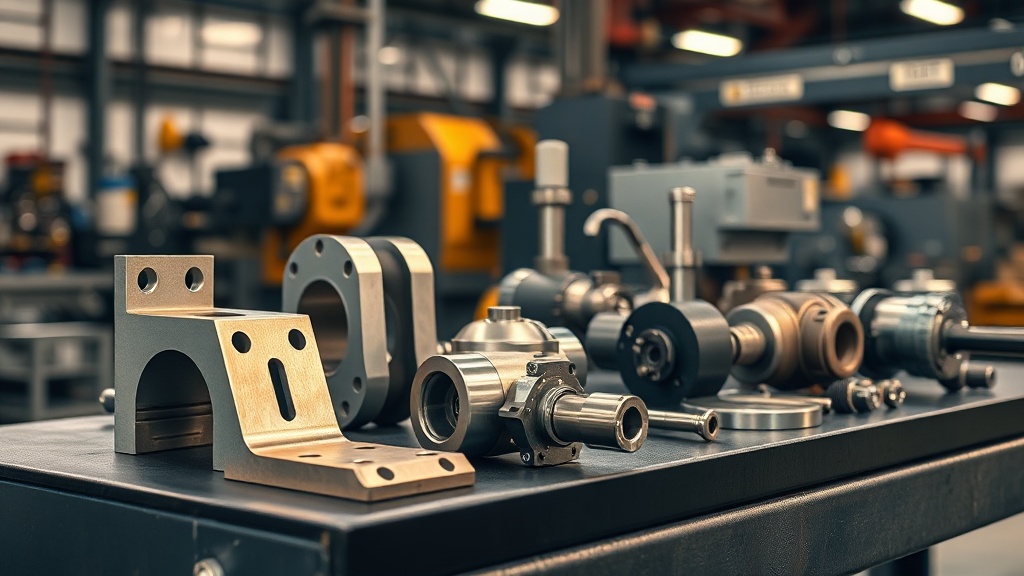
Laser cutting, punching, forming, and seaming of galvanized steel and aluminum for ductwork, enclosures, plenums, and air handling units.
CNC Machining
Precision machining of valve bodies, compressor components, heat exchanger manifolds, and motor housings.
Brazing and Soldering
Joining of copper and aluminum tubing for heat exchangers, coils, and refrigerant circuits.
Injection Molding
Production of grilles, registers, damper blades, condensate pans, and control housings in flame-retardant and UV-stable polymers.
Materials Guide
| Material | Description | Applications |
|---|---|---|
| Galvanized Steel (G90) | Corrosion-resistant steel standard for HVAC ductwork and enclosures | Ductwork, plenums, air handling unit casings, structural frames |
| Copper (C12200 DHP) | Excellent thermal conductivity, brazeable, corrosion resistant in refrigerant systems | Evaporator coils, condenser coils, refrigerant tubing, heat exchanger tubes |
| Aluminum 3003-H14 | Lightweight, good thermal conductivity, formable - standard for HVAC fin stock | Heat exchanger fins, lightweight ductwork, coil housings, condenser frames |
| ABS (Flame Retardant) | UL94 V-0 rated, dimensionally stable, cost-effective for HVAC plastic components | Grilles, registers, damper assemblies, control enclosures, condensate pans |
Canadian HVAC Components Manufacturers
We're currently vetting and onboarding hvac components manufacturers across Canada. Join our waitlist to get introduced to our latest trusted suppliers.
Join the WaitlistCanada vs. Overseas: Cost Comparison
HVAC is a highly seasonal market where inventory timing is critical. Canadian manufacturers provide the short lead times and flexible scheduling that distributors and OEMs need to meet seasonal demand peaks without carrying excessive inventory.
Tariff & Reshoring Advantages
- CUSMA duty-free for HVAC components exported to the US market
- No exposure to steel and aluminum tariffs - Canadian-origin metals qualify under CUSMA
- CSA certification performed domestically, avoiding re-certification of imported components
- Proximity to Canadian and northern US HVAC markets - reduced freight cost and lead time
Frequently Asked Questions
What certifications do Canadian HVAC component manufacturers hold?
Can Canadian manufacturers produce heat pump components?
How does Canadian manufacturing handle HVAC seasonal demand?
What energy efficiency standards apply to Canadian HVAC manufacturing?
Get Matched With a Canadian HVAC Component Manufacturer
Ready to manufacture hvac components in Canada? Join our waitlist and we'll connect you with trusted Canadian manufacturers.
Or email us at hello@theassembly.io
Related Manufacturing Guides
How to Manufacture Aerospace Components in Canada
Guide to manufacturing aerospace components in Canada. CNC machining, additive manufacturing, and sheet metal fabrication from AS9100-certified Canadian aerospace suppliers.
How to Manufacture Agricultural Equipment in Canada
Guide to manufacturing agricultural equipment in Canada. CNC machining, welding, and metal fabrication for farm machinery and components from experienced Canadian manufacturers.
How to Manufacture Automotive Accessories in Canada
Guide to manufacturing automotive accessories in Canada. Injection molding, CNC machining, and 3D printing for aftermarket and OEM automotive parts from Canadian manufacturers.
Manufacturing intel.
Every Tuesday.
Real costs, vetted Canadian suppliers, and government funding alerts. One free email a week.
Unsubscribe anytime. Your data stays in Canada.